
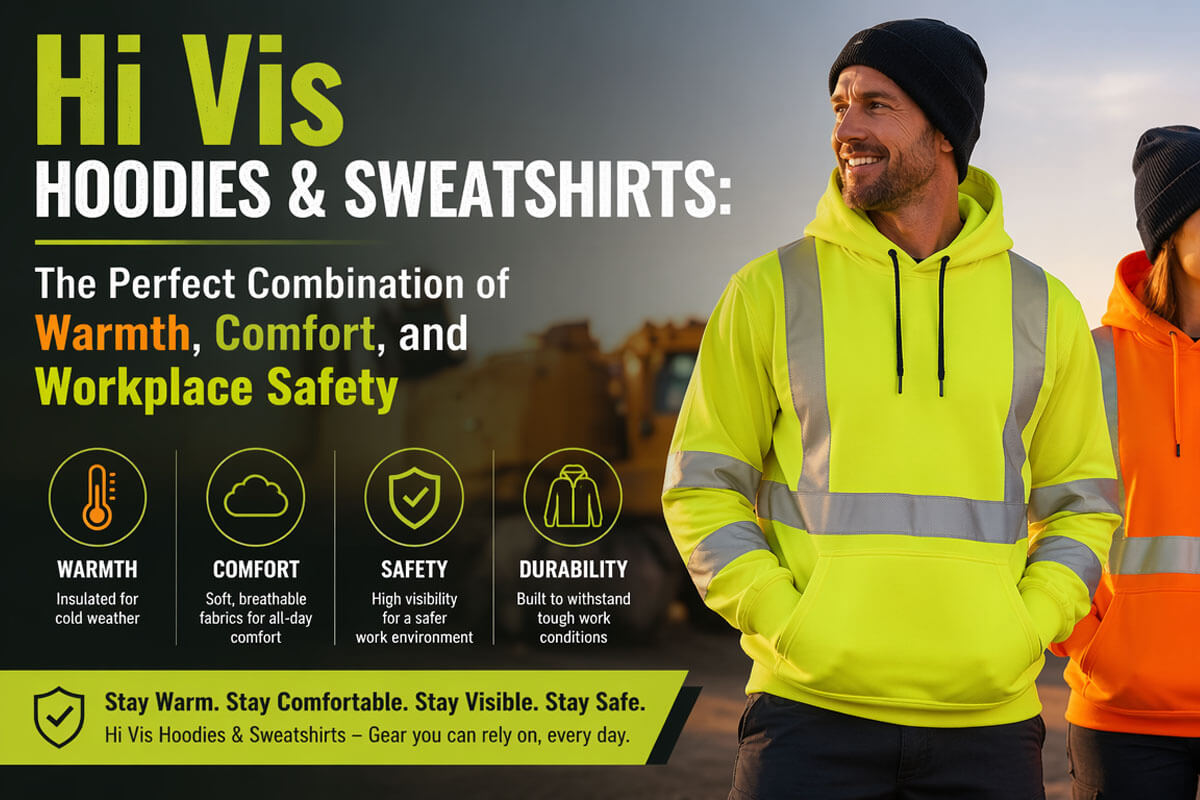
A hi vis hoodie is a fleece sweatshirt in fluorescent fabric with reflective tape and a hood, worn for warmth and visibility in cool weather. Choose a zip-up hoodie for easy venting and layering, a pullover for a simpler design and bigger print area, and a hood-free sweatshirt where hoods are not allowed near machinery. With long sleeves and good tape coverage, a certified hi vis hoodie can reach ANSI/ISEA 107-2020 Class 3 or EN ISO 20471 Class 2 or 3, so it can replace a vest on many sites.
Zip-Up vs Pullover vs Sweatshirt
| Style | Strengths | Limits | Best for |
|---|---|---|---|
| Zip-up hoodie | Easy on/off, vents when warm, layers well | Zip can catch; smaller chest print area | Active work, changing temperatures |
| Pullover hoodie | Nothing to snag; large print area | Harder to vent; must be pulled over the head | Branded uniforms, steady cool weather |
| Crew-neck sweatshirt | No hood near machinery; slim under jackets | Less warmth at the neck | Factories, plants, layering |
Fabric Weights
- Light fleece (~240–280 g/m²): spring and autumn, active work.
- Standard fleece (~280–320 g/m²): most cool-weather work.
- Heavy or bonded fleece (320 g/m² and up): cold days without a jacket; bonded versions resist wind.
- Anti-pilling finish: keeps the fluorescent surface bright after many washes.
Is a Hi Vis Hoodie Safe on Site?
Many sites accept compliant hi vis hoodies. Two points to check:
- Hoods near rotating machinery: some sites restrict hoods and drawcords. A detachable hood, no drawcord or a crew-neck sweatshirt solves this.
- Under a hard hat: a hood worn under a helmet should not push the helmet out of position. Use a helmet liner instead where required.
Visibility and Layering
When the hoodie is the outer layer, it must meet the class your site requires. When it is worn under a jacket, the jacket must be hi vis. In rain, a hoodie absorbs water — wear a waterproof hi vis shell on top.
From Our Factory Floor
We have made hi vis hoodies since 2004; they are among the most requested uniform items. What we check on samples:
- Tape on fleece: sewn tape or tape on a smooth panel holds better than heat transfer on deep pile.
- Pocket placement: the front pocket must not cover the lower tape band.
- Hood fit: the hood should not pull the hoodie back and lift the hem when worn up.
- Shrinkage: fleece and rib cuffs can shrink at different rates; we wash-test before bulk.
- Print durability: large back prints on fleece need inks suited to brushed fabric.
FAQ
Can a hi vis hoodie be Class 3?
Yes, with long sleeves and sleeve tape, if the smallest size meets the Class 3 areas. Check the label.
Is a hi vis hoodie waterproof?
Standard fleece is not. Bonded fleece with a water-repellent face sheds light rain; for real rain, wear a waterproof shell.
Hoodie or softshell jacket?
A hoodie is warmer and more casual; a softshell resists wind and light rain better.
Request a Quote
Send us the style, fabric weight, class, colour, sizes and logo. See our hi vis hoodies and sweatshirts: zip-up reflective hoodie, pullover hi vis hoodie and safety sweatshirt — or contact our team.
This guide is general information from a hi vis clothing manufacturer. Always confirm the standard, class and site rules that apply to your work; the published standards are the final reference.