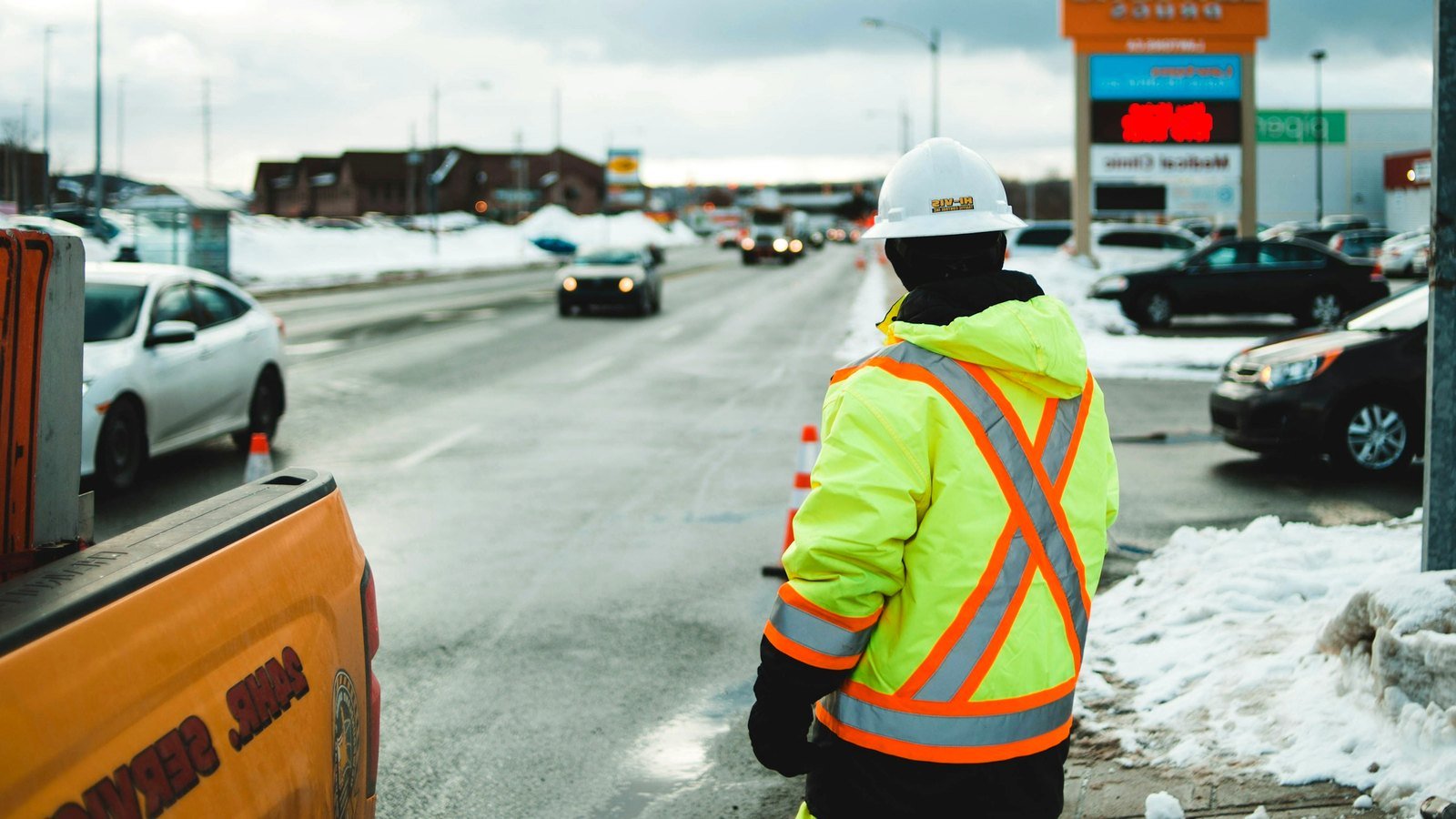
A hi vis heated jacket is a high-visibility work jacket with thin battery-powered heating elements, usually in the chest and upper back. It lets outdoor workers stay warm without stacking bulky layers, and the heat can be adjusted as conditions change. When you buy one, the details that matter most are the number of heating zones, the battery voltage and capacity, how the jacket is washed, and — if batteries are included — the lithium battery documents needed to ship it.
How Heated Workwear Works
Most heated jackets use flexible carbon-fibre or alloy-wire heating panels sewn between the lining and the insulation. A button on the chest switches the heat on and cycles through levels, usually three, with a coloured LED showing the setting. A cable runs to a pocket that holds the battery.
| Component | Common options | What to ask |
|---|---|---|
| Heating zones | 2–5 (chest, upper back, lower back, collar, pockets) | Which zones heat and whether they share one control |
| Power source | 5 V USB power bank or 7.4 V / 12 V lithium pack | Voltage, connector type, whether a battery is included |
| Heat levels | Typically 3 | Surface temperature at each level |
| Controls | Chest button with LED | Is the button usable with gloves? |
| Outer shell | Coated oxford, softshell or membrane | Water and wind resistance; visibility class |
5 V USB vs 7.4 V Battery Packs
| Factor | 5 V USB power bank | 7.4 V dedicated pack |
|---|---|---|
| Heat output | Lower | Higher; better for very cold work |
| Availability | Workers can use any suitable power bank | Must use the matching pack |
| Cost | Lower; jacket can ship without battery | Higher; pack usually supplied |
| Shipping | Simple if no battery is shipped | Lithium battery documents required |
Run time depends on battery capacity, heat setting and the number of zones. The supplier should state run times for the exact battery and setting — be wary of figures quoted without those details.
Visibility and Safety
A heated jacket is still the outer layer, so it needs the same visibility performance as any jacket: ANSI/ISEA 107-2020 Class 3 or EN ISO 20471 Class 2 or 3, depending on your requirement. Heating does not change how the tape and background are assessed, but the battery pocket and control button must not cover required reflective areas.
For electrical safety, ask whether the heating system and battery have relevant electrical and battery test reports for your market. Workers should not use damaged cables or batteries, and the jacket should not be worn in areas where battery-powered equipment is restricted.
Shipping Jackets with Batteries
Lithium batteries are regulated as dangerous goods for transport. Shipments that include batteries normally need a UN 38.3 test summary, a safety data sheet, and correct packing and labelling for air or sea freight. Many buyers order heated jackets without batteries and source power banks locally, which makes shipping simpler and cheaper. Tell your supplier which approach you want before you request a quote.
From Our Factory Floor
As a manufacturer since 2004, these are the checks we make on heated jacket samples:
- Cable routing. The cable should run through a channel inside the lining, not loose, so it does not snag or fatigue at the pocket opening.
- Connector strain relief. Most failures happen where the cable meets the connector. A moulded strain relief makes a real difference.
- Heating panel position. Panels need to sit close to the body. In loose-fitting large sizes, the panel position should be checked on the size, not just the sample size.
- Wash test. The heating system should survive washing as the care label describes, with the battery removed and the connector stowed.
- Button placement. The control button should be operable with work gloves and must not sit on the reflective tape.
Care
- Remove the battery and tuck the connector into its pocket before washing.
- Wash on a gentle cycle following the label; do not dry clean, iron or tumble dry on high heat.
- Charge and store batteries following the battery supplier’s instructions.
What to Specify When You Order
- Heating zones, power source and whether batteries are included
- Visibility standard and class; shell type
- Colour, size breakdown and logo method
- Destination market, so the right battery and shipping documents can be prepared
See our heated safety jacket.
FAQ
Can a heated hi vis jacket be washed?
Yes, with the battery removed and following the care label. The heating elements are designed to tolerate washing.
Is there a heated hi vis hoodie?
Yes. The same heating systems can be built into hi vis hoodies and vests; the hoodie is lighter but less weather-resistant.
How hot does it get?
It depends on the system and setting. Ask the supplier for surface temperatures at each level for your chosen battery.
Request a Quote
Send us the quantity, heating zones, power source, whether batteries are included, the visibility class you need, colours, sizes and destination. We will confirm the build, documents and a sample plan. Contact our team.
This guide is general information from a hi vis clothing manufacturer. Always confirm the standard, class and site rules that apply to your work; the published standards are the final reference.