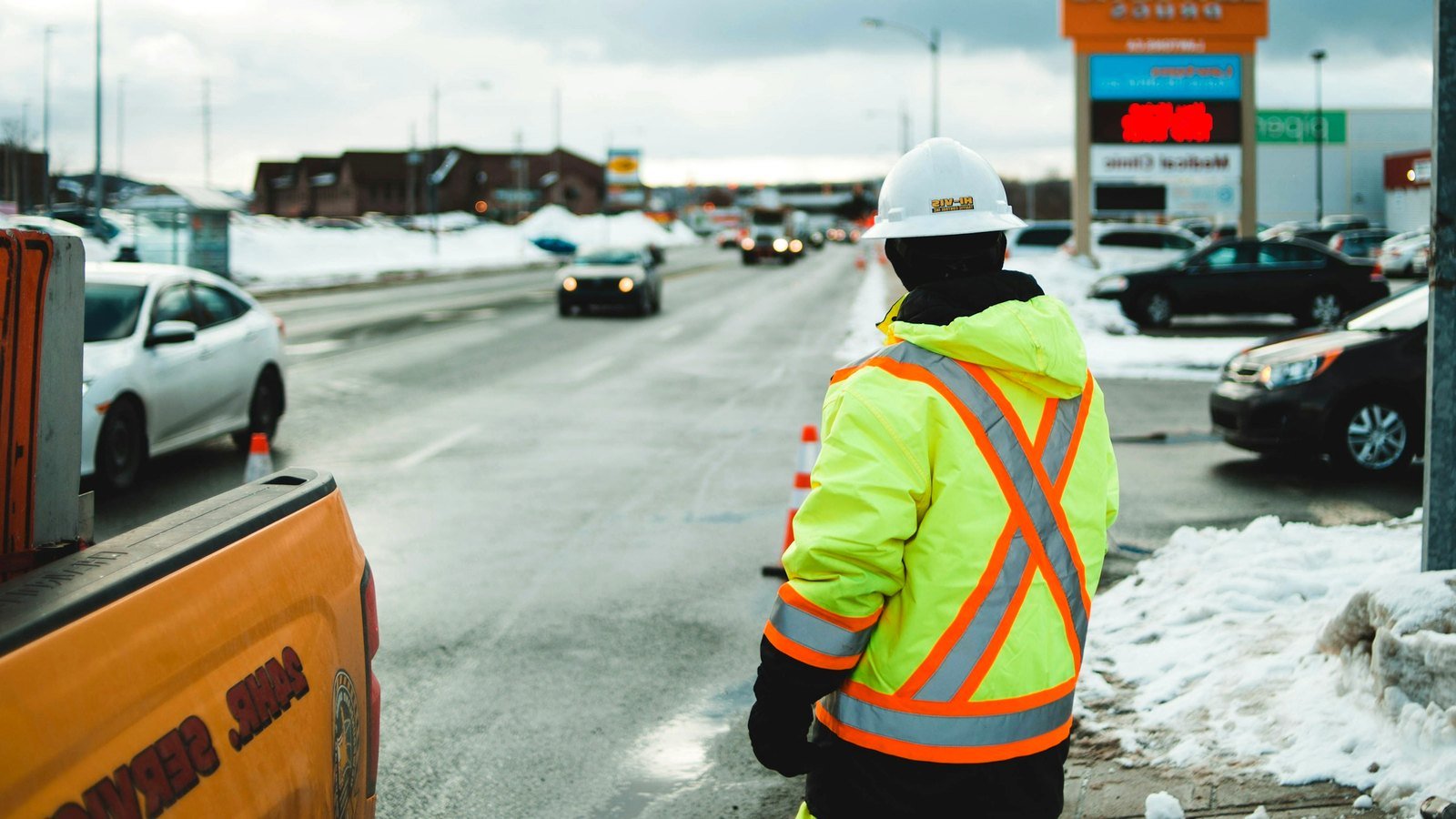

Hi vis jacket vs vest comes down to two questions: what visibility class the job requires, and what the weather is doing. A vest is enough for most work that needs Class 2 — general construction, logistics yards, utilities — in mild weather. You need sleeves, from a jacket, a long-sleeve shirt or a coverall, when the job needs Class 3 (high-speed traffic, night work, poor visibility), or when wind, rain or cold make a vest impractical. Sleeves add visible area and, just as importantly, show the movement of the arms to drivers.
Why Sleeves Matter for Visibility
Both main standards tie the top class to arm coverage:
- ANSI/ISEA 107-2020: Class 3 garments must provide more coverage than Class 2, including coverage of the arms. A sleeveless vest cannot be Class 3 by itself. A Class 2 vest worn with Class E trousers can be rated Class 3 as an ensemble.
- EN ISO 20471: Class 3 requires at least 0.80 m² of background and 0.20 m² of reflective material and coverage of the torso plus sleeves or legs. A vest typically reaches Class 2.
Beyond area, sleeves with reflective bands make it easier for drivers to recognise a person — moving arms are a strong visual cue, especially at night.
Decision Table
| Situation | Vest | Jacket (or sleeved garment) |
|---|---|---|
| Warehouse, car park, low-speed areas | Yes (Class 1–2) | Not required |
| General construction, daytime | Yes (Class 2) | Optional for weather |
| Roadwork near traffic, daytime | Class 2 often accepted | Many contracts ask for Class 3 |
| Night work, high-speed roads | Not enough alone | Yes (Class 3) |
| Rain, wind or cold | Over a jacket, if the jacket is not hi vis | Yes, hi vis outer layer |
| Hot weather, active work | Mesh vest | Lightweight long-sleeve hi vis shirt if Class 3 needed |
Your contract, site rules and local regulation always come first. In the US, federal-aid highway workers must wear ANSI/ISEA 107 Class 2 or Class 3 apparel; many agencies require Class 3 at night.
Practical Pros and Cons
| Factor | Vest | Jacket |
|---|---|---|
| Cost per piece | Low | Higher |
| Layering | Goes over any clothing | Is the outer layer |
| Weather protection | None to little | Wind, rain and cold |
| Heat in summer | Cool, especially mesh | Hot unless lightweight |
| Maximum class alone | Class 2 | Class 3 |
| Issue to visitors | Easy, one size fits many | Needs proper sizing |
A Common Mistake: Vest Over a Dark Jacket
In winter, many crews wear a Class 2 vest over a dark, non-hi-vis jacket. That keeps them at Class 2, and if the vest is too small it can ride up, twist or be partly covered by the jacket’s hood or a harness. If the job needs Class 3 in winter, a hi vis jacket is the cleaner solution. If a vest is worn over outerwear, size it for the outerwear.
From Our Factory Floor
Since 2004 we have made both vests and jackets for the same buyers, and the most cost-effective programmes we see usually combine them:
- A mesh or solid vest for summer and for visitors.
- A hi vis jacket or 3 in 1 jacket for winter and night work.
- A convertible bomber with zip-off sleeves where crews need both on the same day — the sleeves zip off and the bodywarmer keeps its own tape.
When the same logo goes on both garments, we place it in the same position so the crew looks consistent.
FAQ
Can I wear a hi vis vest over a hi vis jacket?
You can, but it is unnecessary if the jacket already meets your required class, and it adds bulk.
Is a hi vis T-shirt with sleeves Class 3?
Short sleeves usually are not enough for ANSI Class 3. Long-sleeve shirts can reach Class 3 depending on tape layout and size.
What is a Class E garment?
Under ANSI/ISEA 107, Class E covers supplemental items like trousers and shorts. They are not compliant alone but raise a Class 2 top to Class 3.
Request a Quote
Tell us the jobs, required class, season and quantities, and we will recommend a vest, jacket or combined programme. Browse hi vis vests and hi vis jackets, or contact our team.
This guide is general information from a hi vis clothing manufacturer. Always confirm the standard, class and site rules that apply to your work; the published standards are the final reference.