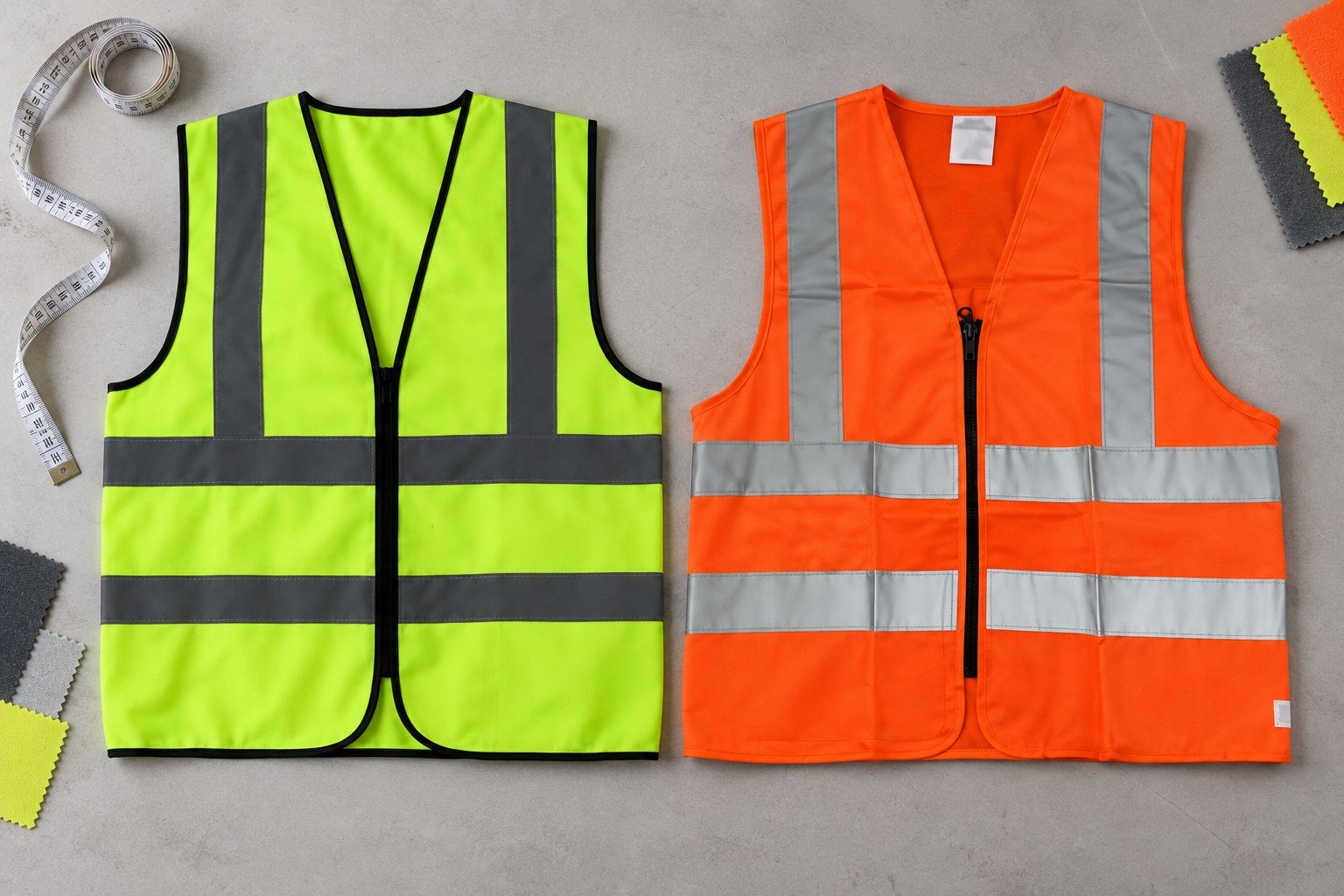
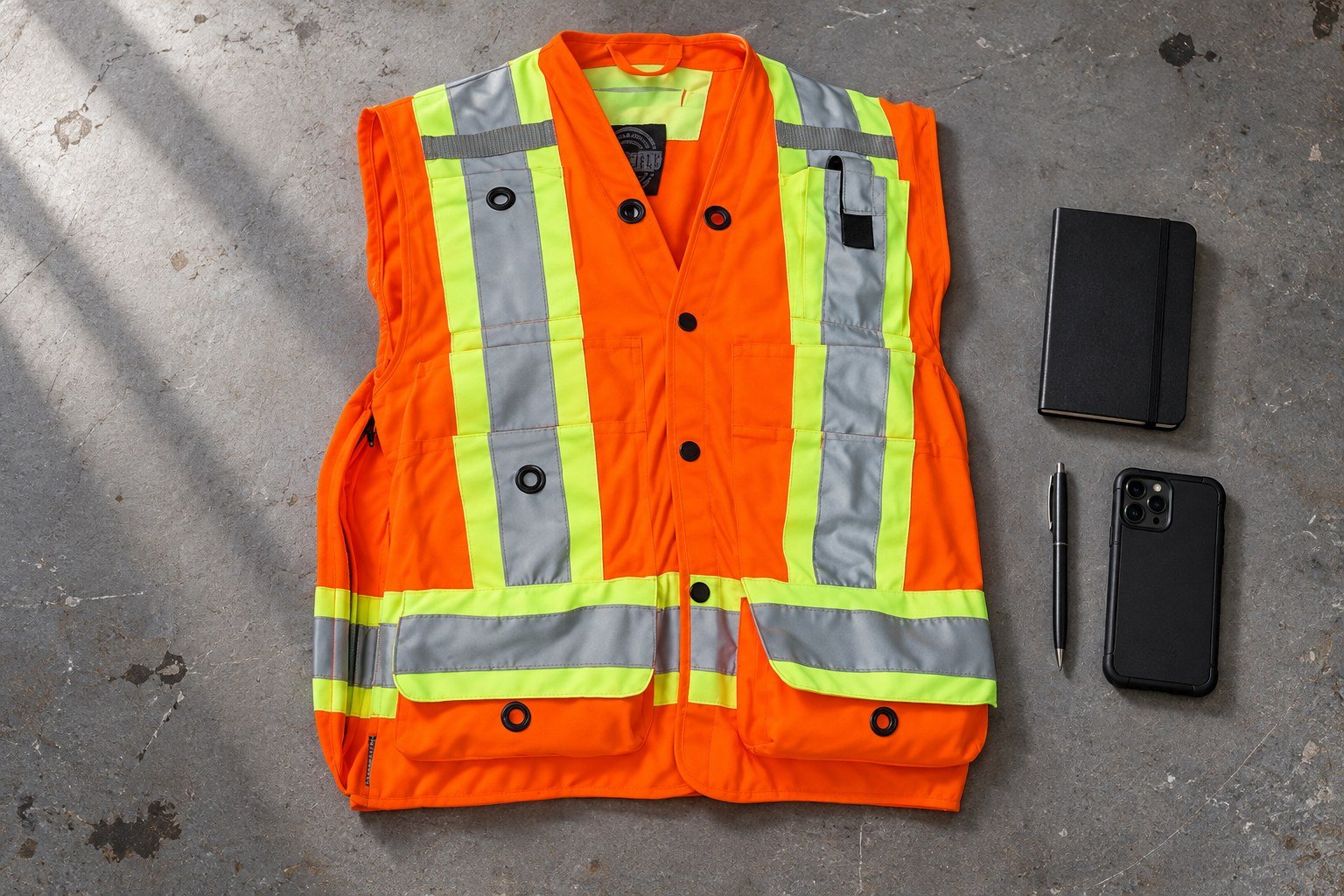
Choose a hi vis vest with pockets by matching the storage layout to the items workers carry, the movements they make, and the other clothing or equipment they use. Check usable pocket dimensions and closure access on a physical sample. Pocket count alone does not tell you whether a vest will suit the job.
Based on our 20 years of manufacturing experience, we recommend starting with a carry list before choosing a pocket layout. A phone in a protective case, a notebook, and a radio each create different design questions. Listing the actual items gives the buyer and manufacturer something specific to measure and review.
This guide helps procurement teams compare a safety vest with pockets for practical use. Select the required visibility specification with your safety team first, then evaluate storage features within suitable garment options.
1. Make a Carry List for Each Role
Ask workers what they need to keep on the vest during a normal task. Record the item, its dimensions, how often it is used, and whether it needs to remain secured during movement.
The examples below are prompts for building your own specification, not recommendations for a particular safety class or permission to carry every listed item on a vest.
| Item to assess | Detail to record | Pocket feature to examine |
|---|---|---|
| Phone | Dimensions with its normal protective case | Clear opening, usable depth, and closure clearance |
| Notebook | Size and orientation used at work | Access without excessive folding or awkward reaching |
| Pens or markers | Length, diameter, and number carried | Dividers, depth, and access while wearing gloves |
| Identification card | Holder dimensions and display requirements | Visibility of the card and suitability of the retaining structure |
| Radio | Device size, mounting instructions, and accessory routing | A suitable attachment arrangement approved for that use |
| Small task items | Shape, weight, and access frequency | Appropriate retention and the manufacturer’s loading guidance |
Review whether an item belongs on the vest at all. Heavy, sharp, or specialist equipment may require a purpose-designed holder or a different carrying system. An ordinary pocket or loop should not be assumed to be load-rated or suitable for attaching safety equipment.
Once the carry list is clear, compare relevant styles in our hi vis vest range.
2. Measure the Usable Pocket, Not Just Its Outside
An external pocket outline does not describe all of the space available inside it. Seams, dividers, the opening, and the closure can affect whether an object fits and can be retrieved comfortably.
Ask for a drawing or sample that makes the following dimensions clear:
- The clear width of the opening.
- The usable internal width and depth.
- Any available expansion depth.
- Space needed for the flap or other closure to operate.
- Any internal division or obstruction that changes how the item sits.
Use the actual item during sample review. A phone measurement should include the case that workers use. A pocket intended for a notebook should be checked with that notebook, not a smaller substitute.
Manufacturing recommendation: document pocket measurements in the purchasing specification, alongside garment measurements. This makes storage capacity a defined requirement rather than an assumption based on a product photograph.
3. Compare Pocket Closures by the Task
The closure should support the way a worker accesses the item. Evaluate it with the gloves and working layers that will be worn, and check retention during representative movement in a safe setting.
| Closure option | Reason to consider it | What to check on the sample |
|---|---|---|
| Open top | Access without operating a fastener | Whether the item remains in place during the intended movements |
| Flap with hook-and-loop fastening | A covered opening with adjustable overlap | Gloved access, engagement, and suitability for the work environment |
| Zipper | An opening that can be closed along its length | Pull access, clearance around the item, and ease of opening |
| Snap fastening | A defined fastening point | Opening force, glove compatibility, and the remaining gaps |
These are comparison criteria, not universal performance rankings. A zippered pocket is not automatically waterproof, and a flap is not proof that an item cannot fall out. If water protection or a specific retention performance matters, ask for the relevant construction details and evidence.
4. Evaluate Fabric and Pocket Construction Together
Do not choose between mesh and solid fabric using the body fabric alone. Request the specification for the pocket panel, its attachment, and any reinforcement as well.
For a mesh-body vest, inspect how the proposed pocket is attached to the surrounding material. For a solid-body vest, examine how the complete garment feels and moves with the intended items inside. For a mixed construction, identify which areas use each material and why.
A useful sample review records:
- Whether the pocket opening and seams lie as intended.
- Whether the proposed reinforcement matches the agreed drawing.
- How the garment hangs with the approved carry items.
- Whether items can be inserted and removed without catching.
- Whether the manufacturer specifies any restrictions on use or loading.
Visible reinforcement is a construction feature, not a load-capacity certificate. If a particular strength or durability requirement is important, define the test and acceptance criteria with the supplier instead of inferring performance from appearance.
5. Try the Vest in the Way It Will Be Worn
Sample fitting should include the workwear layers and relevant equipment the vest must accommodate. CCOHS advises that high-visibility garments should fit correctly over clothing and that other clothing or equipment should not cover the high-visibility materials. Its guidance is a useful fitting reference, while the applicable local requirements still need to be checked. CCOHS high-visibility apparel guidance.
Run a controlled fitting session away from operational hazards. With the agreed items in place, ask the wearer to:
- Fasten the front closure as intended.
- Reach each pocket using the normal gloves.
- Raise both arms and reach forward.
- Bend and sit where these movements are part of the role.
- Remove and replace frequently used items.
- Report pressure, obstruction, awkward access, or unwanted movement of the garment.
Record the role, vest size, clothing layers, and items used. Feedback such as “the phone catches on the opening when removed with gloves” gives the manufacturer a more useful revision target than “the pocket is uncomfortable.”
Do not alter a harness or other protective equipment to make a pocket arrangement work. Compatibility questions should be resolved using the equipment manufacturer’s instructions and the employer’s safety assessment.
6. Keep Pocket Features Separate From Visibility Claims
A vest can have a convenient storage layout without being appropriate for every workplace. Pocket quantity, radio loops, and identification windows do not establish a garment’s visibility classification.
ISEA describes ANSI/ISEA 107 as setting criteria for conspicuous materials, including minimum areas and material placement. When a pocket panel, logo, or other feature is changed, ask how the proposed finished configuration will be reviewed against the specified requirements. ISEA high-visibility products guidance.
For procurement, keep two sets of acceptance questions:
- Garment requirements: does the documented product specification match the intended market and workplace requirement?
- Storage requirements: do the pockets fit the approved items, allow practical access, and work with the rest of the garment?
Both matter. A successful pocket trial does not replace product conformity evidence, and a product label does not tell you whether a worker’s particular phone fits the pocket.
7. Use a Pocket Approval Sheet Before Ordering in Bulk
Create one record for each pocket rather than approving only the total number of pockets.
| Approval field | What to record |
|---|---|
| Pocket reference | Position or drawing identifier |
| Intended contents | Specific item or agreed category of item |
| Usable dimensions | Opening, internal width, depth, and any expansion |
| Closure | Type, placement, and gloved-access observations |
| Construction | Agreed panel material, seams, and reinforcement |
| Fitting review | Garment size, clothing layers, and movements checked |
| Approval result | Accepted details and any required changes |
Repeat the review for materially different roles or size requirements. If a revised pocket is approved, update the drawing or specification before bulk production. Keep that revision with the order so the factory and purchasing team are working from the same reference.
Specify the Pocket Layout Your Team Actually Needs
For a useful quotation, send the vest manufacturer your destination market, required garment specification, quantities by size, and a carry list with item dimensions. Include photographs or a drawing showing your preferred pocket positions, then ask for a sample that can be checked against those requirements.
If the order also includes company branding, approve the logo and pocket layout together. A logo position should be reviewed on the same finished configuration that workers will wear.
Contact our manufacturing team to discuss a hi vis vest with pockets for your crew. A clear carry list and sample review give both sides a practical starting point for selecting or developing the right layout.
External guidance checked on October 12, 2026. This guide covers purchasing and fitting checks; it does not assign a safety class, pocket load rating, or equipment compatibility to any individual vest.