To order custom hi vis vests, confirm the working environment, garment specification, size breakdown, logo artwork, sample approval process, and delivery requirements before bulk production. A useful quotation should describe the finished vest clearly enough that both the buyer and manufacturer can check the same details.
Based on our 20 years of manufacturing experience, we recommend approving the vest specification and logo layout together. Treating the logo as a final addition leaves an important part of the finished garment outside the original approval process. Your artwork, pockets, reflective materials, and size range need to work as one design.
This guide gives procurement teams, distributors, and workwear brands a practical checklist for ordering a custom safety vest. It covers purchasing and sample review; the applicable safety requirements must be confirmed for the intended workplace and market.
1. Define the Work Before Choosing the Vest
Start your enquiry with a short description of how the vest will be used. “For construction workers” is a starting point, but it does not tell a manufacturer what workers carry, what they wear underneath, or which specification the buyer requires.
Provide these details:
- Work setting: road work, site supervision, surveying, logistics, or another defined activity.
- Destination market: the country where the garment will be supplied and used.
- Required garment specification: the standard, edition, garment type, and performance class specified by your safety team or customer, where applicable.
- Clothing worn underneath: work shirts, jackets, or other required layers.
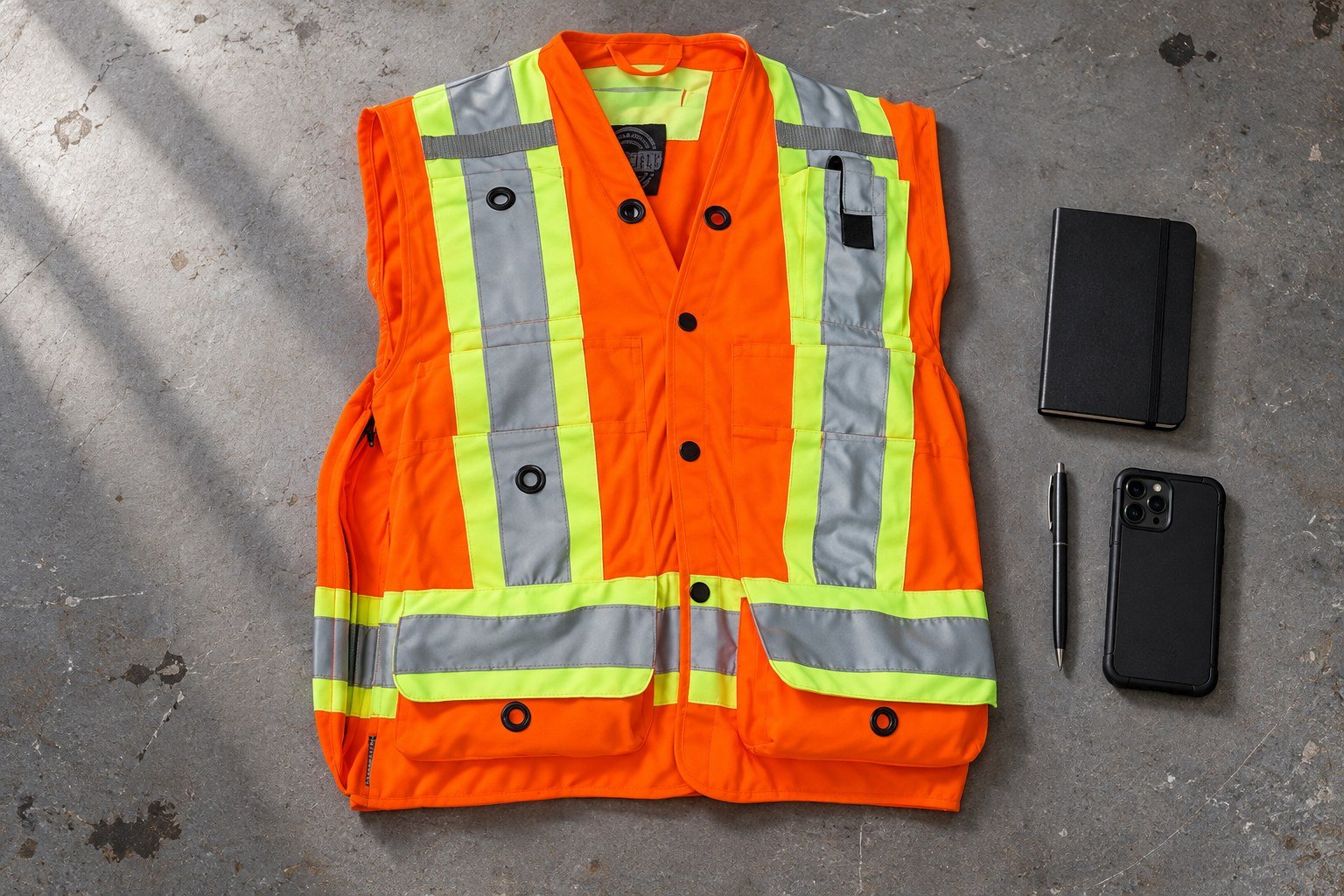
- Functional needs: pocket contents, front closure, identification display, and compatibility with other equipment.
- Care requirements: the intended cleaning method and any customer-specific expectations.
For U.S. specifications, ISEA explains that ANSI/ISEA 107 addresses material performance, minimum areas, and the placement of conspicuous materials. A bright color or reflective-looking strip alone is not evidence that a finished vest meets a specified requirement. Check the documentation for the garment you are buying. ISEA high-visibility products guidance.
Browse our hi vis vest range to identify a starting style, then write the requirements for your particular order.
2. Send a Specification That Can Be Quoted Accurately
A custom safety vest quotation is easier to compare when every supplier receives the same information. Separate confirmed requirements from features you want the manufacturer to propose.
| Item | What to send | What to confirm in the quotation |
|---|---|---|
| Base style | Product reference, drawing, or sample photographs | Whether the quote uses an existing style or a new construction |
| Fabric | Required construction and any documented performance needs | The exact fabric specification being offered |
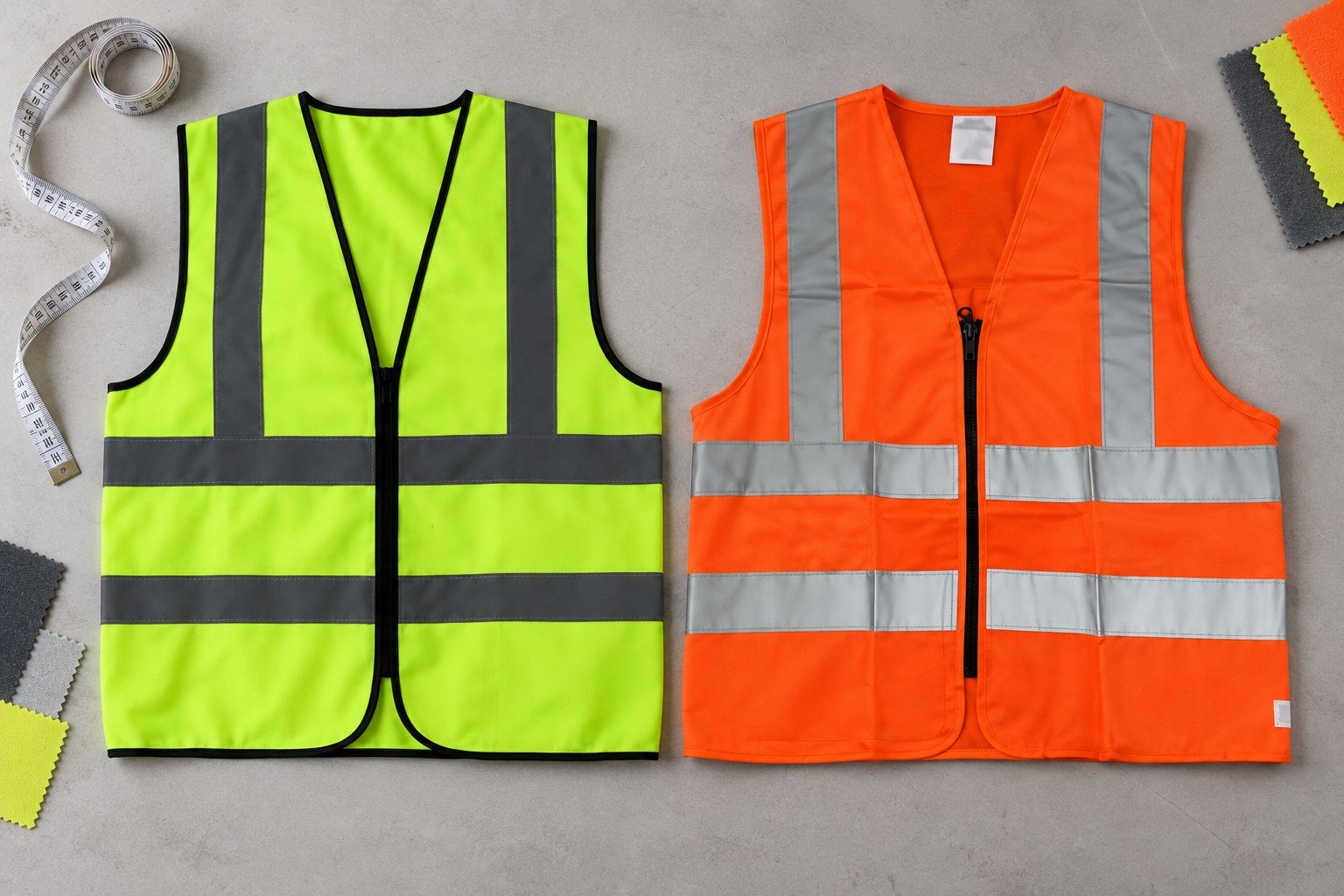
| Colors | Named color reference or approved physical reference | How production color will be assessed |
| Sizes | Quantities for each size and destination | Garment measurements, tolerances, and labeling |
| Pockets | Items to carry, pocket positions, and closures | Usable pocket dimensions and construction |
| Logo | Artwork file, colors, dimensions, and positions | Decoration method and finished appearance |
| Packaging | Individual packing, size labels, and carton grouping | What is included in the unit price |
| Delivery | Destination and required arrival date | Production timing, freight basis, and exclusions |
Avoid relying on “same as the picture” when the picture does not show the back, inside construction, or dimensions. A photograph can communicate the intended look; a specification records the details that must be reproduced.
Manufacturing recommendation: give the specification a revision number. If the logo width or pocket position changes after the first quotation, update the document and have the revised version acknowledged before proceeding.
3. Check Logo Size and Position on the Actual Vest
Specify the logo in physical dimensions, not just as a percentage of a digital mockup. Record its width, height, and position relative to a defined garment feature, such as the center front or a seam.
Review the artwork against the smallest and largest sizes in the order. A layout that appears balanced on one sample may sit differently when the garment proportions change.
Ask the manufacturer to show:
- The proposed front and back layouts.
- Logo dimensions and placement references.
- The relationship between decoration, pockets, seams, and reflective materials.
- How the finished decorated design will be checked against the specified garment requirements.
Logo permissions are not universal across standards. CCOHS describes identification-marking restrictions in its Canadian guidance; those provisions should not be treated as a general allowance for another market. For the order in question, obtain a review against the applicable specification rather than assuming that a logo size used elsewhere is acceptable. CCOHS high-visibility apparel guidance.
4. Choose the Decoration Method With a Physical Sample
Ask the manufacturer which decoration methods are compatible with the selected fabric and garment design. Screen printing, heat transfer, and embroidery should be evaluated against the particular order; none is automatically the best option for every hi vis vest.
| Method under consideration | What to review on the sample | Question for the manufacturer |
|---|---|---|
| Screen printing | Edge clarity, coverage, alignment, and print feel | Is the proposed ink and process suitable for this fabric and care method? |
| Heat transfer | Detail, edges, surface appearance, and attachment | Which transfer system and application conditions are specified? |
| Embroidery | Stitch definition, reverse-side finish, and local distortion | Is the backing and stitch construction appropriate for this garment? |
A screen image cannot demonstrate the feel or attachment of the decoration. Review a decorated physical sample when these details affect acceptance. If cleaning durability matters to the contract, agree on the relevant test method and acceptance criteria, then obtain the corresponding evidence. Do not substitute an unspecified promise of “washable” for an agreed requirement.
5. Approve the Sample Against a Written Checklist
Before reviewing a sample, establish what it represents. A style sample may demonstrate the general design while using substitute fabric or temporary decoration. A production-representative sample should have its materials, construction, and any remaining differences clearly identified.
Use this approval checklist:
- The style and specification revision match the purchase requirement.
- The sample measurements have been recorded and compared with the agreed size chart.
- Workers can try the vest over the intended clothing.
- Pocket openings, closures, and usable dimensions match their intended contents.
- Logo spelling, colors, dimensions, and placement have been checked.
- Garment labels and care instructions match the approved product documentation.
- Any unresolved difference is written down, with responsibility for its resolution.
- The approved reference sample or an agreed equivalent remains identifiable for later comparison.
Approval should state what is accepted. “Looks good” is less useful than a dated approval identifying the sample, specification revision, and any conditions that still apply.
6. Compare the Complete Order, Including Changes and Reorders
Compare supplier offers on the same basis: garment construction, decoration, quantities by size, packaging, documentation, inspection arrangements, and delivery terms. A lower quoted unit price may reflect a different specification or an excluded service.
Request the minimum order quantity for the configuration you actually want. An existing style with a logo and a newly developed vest can involve different production arrangements; do not assume that one published MOQ applies to both.
For delivery, ask which approvals or inputs start the production schedule and what happens if artwork or quantities change. Distinguish the production completion date from the required arrival date.
For reorders, retain the approved artwork, size chart, specification revision, label information, and packing instructions. Ask the manufacturer to flag material or process changes before reproducing the order.
A Copy-and-Send Enquiry for Custom Hi Vis Vests
Use this template when requesting a quotation:
We are sourcing custom hi vis vests for [activity] in [destination market]. Our required garment specification is [requirement or request for clarification]. Please quote [quantity], with the attached size breakdown and artwork. We need [pocket and closure requirements], [logo positions and dimensions], and [packing instructions]. Please confirm the proposed materials and decoration method, MOQ, sample process, applicable product documentation, production timing, delivery terms, and any exclusions.
Ready to define your order? Contact our manufacturing team with your style reference, size quantities, logo artwork, and destination requirements. These details give us a clear basis for discussing the appropriate custom hi vis vest specification.
External guidance checked on October 12, 2026. Product suitability and conformity must be assessed for the finished garment and its intended use; this purchasing checklist does not establish compliance for an individual product.