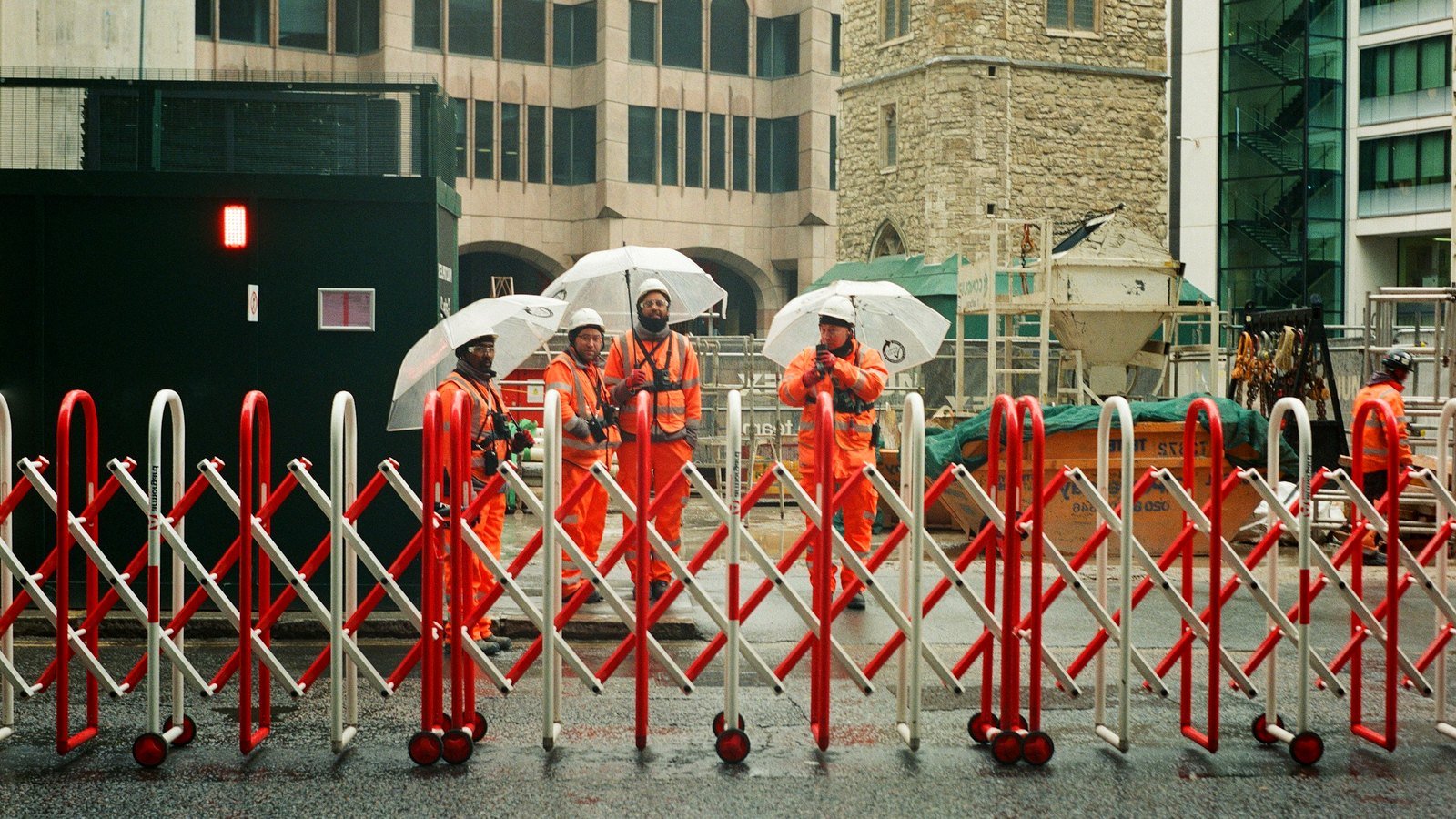

A hi vis FR winter jacket keeps workers warm, visible and protected from flash fire or arc flash in cold weather. The hard part is that every layer has to be flame resistant: the shell, the insulation, the lining, the tape, the thread, the zip and any logo. A standard winter jacket worn over FR clothing can melt and burn in an incident. Choose the FR standard from your hazard assessment — arc rating for electrical work, NFPA 2112 or EN ISO 11612 for flash fire and flame — then confirm the visibility class on the same finished jacket.
Who Needs One
- Electrical utilities, linemen and substation crews working through winter
- Oil and gas field crews and pipeline workers in cold regions
- Refinery and petrochemical maintenance teams working outdoors
- Rail and transit crews near electrical equipment
How an FR Winter Jacket Is Built
| Layer | Standard winter jacket | FR winter jacket |
|---|---|---|
| Shell | Polyester oxford with PU coating | FR shell, often with an FR waterproof membrane or coating |
| Insulation | Polyester padding | FR padding (e.g. modacrylic or aramid blends) |
| Lining | Polyester taffeta or fleece | FR lining |
| Tape | Standard retroreflective | FR retroreflective |
| Hardware | Plastic zip, plastic toggles | Brass or covered zips, FR hook-and-loop, no exposed plastic |
Standards and Ratings
- Arc flash: ASTM F1506 / NFPA 70E (US) or IEC 61482-2 — the jacket carries an arc rating in cal/cm². Layering a jacket over an arc-rated shirt changes the system rating; ask for layered-system test results if you rely on them.
- Flash fire: NFPA 2112 (US).
- Heat and flame: EN ISO 11612 (Europe).
- Static: EN 1149-5 where explosive atmospheres exist.
- Cold and rain: EN 342 or EN 14058 for cold, EN 343 for rain protection.
- Visibility: ANSI/ISEA 107-2020 Class 3 or EN ISO 20471 Class 3 are typical for winter jackets.
Choosing Between Options
| Need | Option |
|---|---|
| Very cold, mostly static work | Insulated FR parka |
| Changing temperatures through the day | FR shell with zip-in FR liner |
| Active work in moderate cold | FR bomber or FR softshell over FR base layers |
| Wet and cold | FR waterproof shell with FR insulation |
From Our Factory Floor
Since 2004 we have learned that FR winter jackets fail audits far more often on small parts than on the main fabric:
- Drawcord toggles, zip pullers and label tapes made of standard plastic or polyester.
- Seam tape on the waterproof shell that is not FR.
- Logos applied with standard heat-transfer vinyl.
- Hood brims stiffened with non-FR materials.
We prepare a bill of materials listing the FR status and certificate of every component before sampling, so nothing is substituted in bulk production.
FAQ
Can I wear a normal winter jacket over FR clothing?
Not where flash fire or arc hazards exist. The outer jacket can ignite or melt and defeat the FR layer underneath.
Are FR winter jackets heavier?
Usually somewhat heavier and more expensive than standard winter jackets, because FR insulation and fabrics are denser.
Can an FR jacket be waterproof?
Yes, with an FR membrane or coating and FR seam tape.
Request a Quote
Tell us the hazard, FR standards and arc rating, visibility class, climate, quantity, colours, sizes and logo. We will prepare a component list and sample. See also FR coveralls and insulated safety coats, or contact our team.
This guide is general information from a hi vis clothing manufacturer. Always confirm the standard, class and site rules that apply to your work; the published standards are the final reference.