
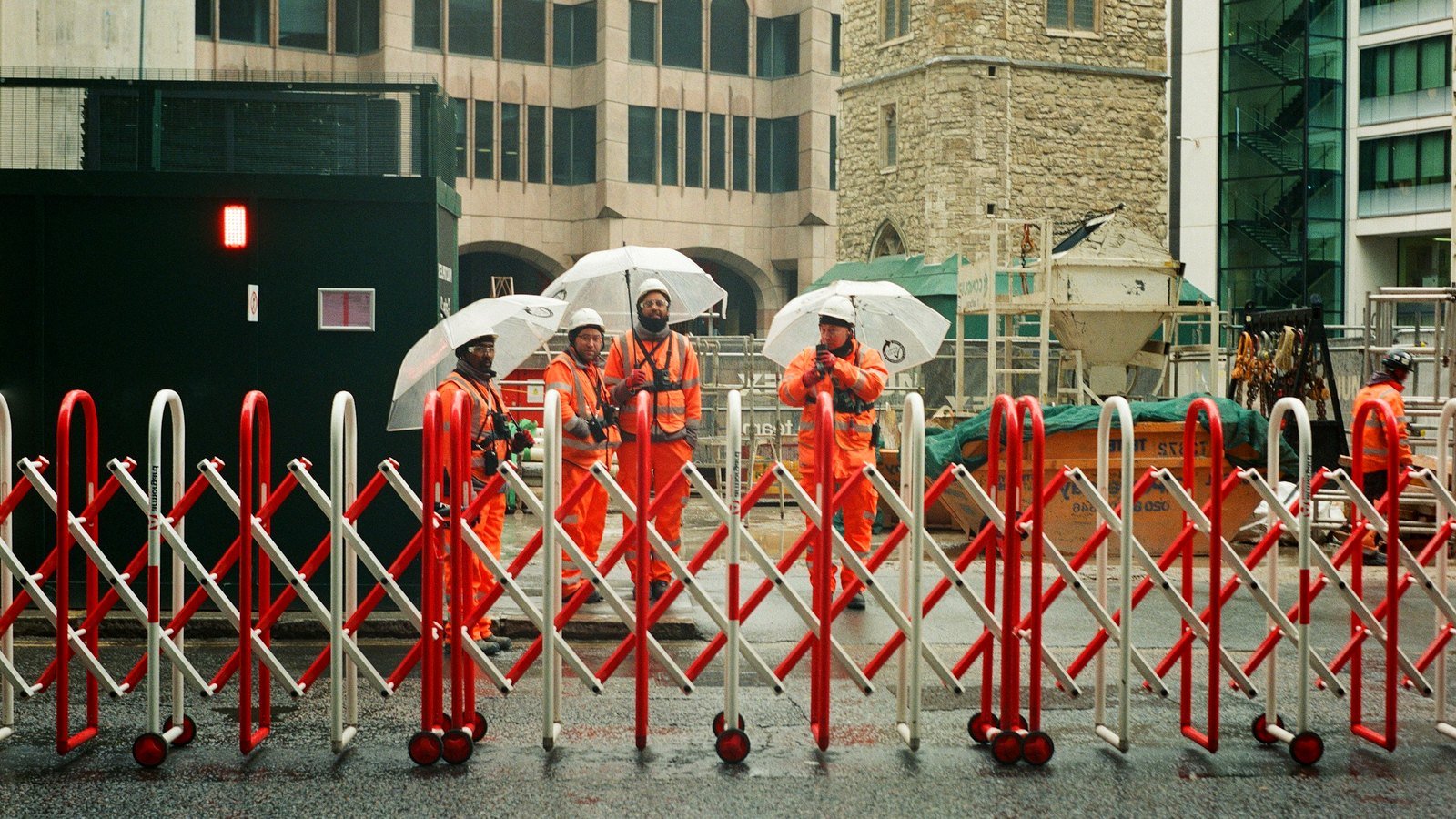
If you are sourcing hi vis coats for crews who work outdoors in cold, wind or rain, the choice usually comes down to three styles: parka, bomber and shell. Each one solves a different problem. The right spec keeps workers visible, warm and dry without over-buying heavy garments they won’t wear. This guide compares the three styles and the key standards buyers should check.
Parka, Bomber or Shell: The Core Differences
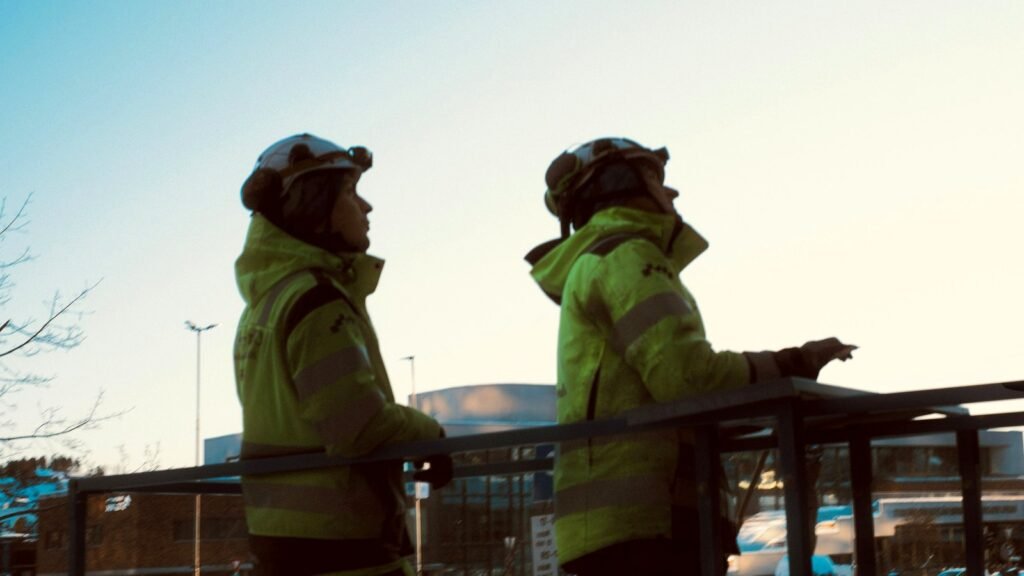
A hi vis coat is not one shape. The three common styles in industrial workwear are the insulated parka, the shorter bomber and the uninsulated shell. The table below summarises how they behave in different conditions.
| Feature | Hi Vis Parka | Hi Vis Bomber | Hi Vis Shell |
|---|---|---|---|
| Typical length | Thigh-length or longer | Waist to hip | Hip to thigh, often lighter |
| Insulation | Medium to heavy, often removable liner | Light to medium, usually fixed or zip-out | None or very light mesh |
| Waterproofing | Often waterproof or water-resistant outer | Usually water-resistant; some waterproof | Often waterproof or highly water-resistant |
| Best for | Cold, windy, wet conditions; long shifts outdoors | Moderate cold, high mobility, driving or loading | Rain, wind, layering systems; active work |
| Mobility | Lower due to length and weight | Higher, less fabric | Highest, often lightweight |
These are general categories. A given parka may be lighter than a heavy bomber, but the silhouette and intended use follow the pattern above. When you buy for a mixed crew, it often makes sense to offer a parka for winter and a shell for spring/autumn rain, with a bomber as an in-between or for drivers.
Matching the Coat to the Job
Parka: For Cold, Long Exposure and Harsh Weather
A hi vis parka is the choice when workers stand or walk outdoors for hours in temperatures near or below freezing, often with wind and snow. The longer body covers the upper legs and reduces heat loss through the core. Many parkas have a removable thermal liner, so the same outer shell can be used as a lighter rain jacket in milder months. Look for a hood that fits over a hard hat or has a high collar, a two-way front zip for access to inner layers, and enough room in the shoulders to swing a hammer or climb.
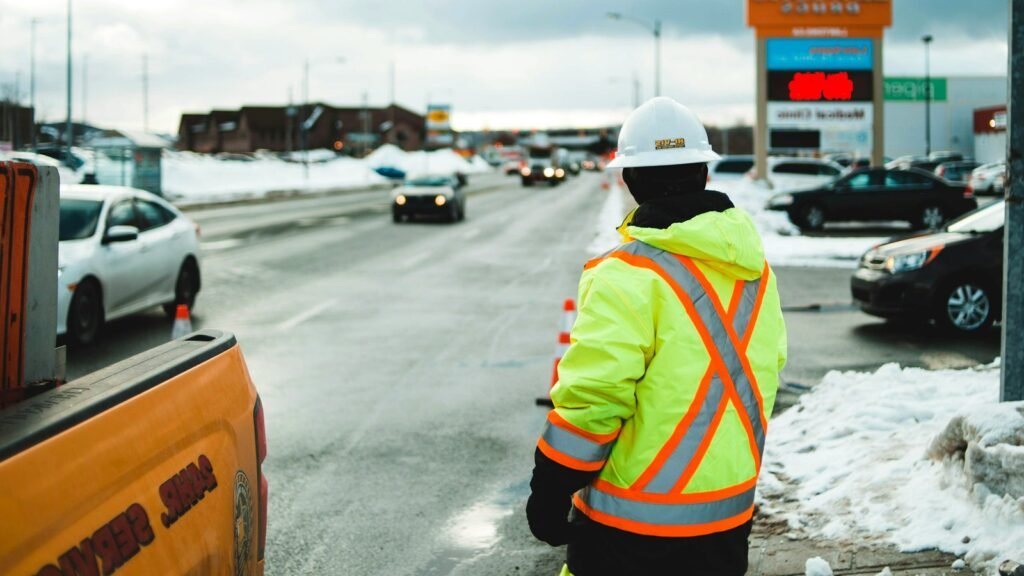
If you are buying for utilities, road maintenance or construction in northern US, Canada or northern Europe, a parka is usually the default winter hi vis coat. It is also the most expensive style because of the extra fabric, insulation and features.
Bomber: For Moderate Cold and Frequent Movement
The bomber is shorter, often ending at the waist or top of the hips. It allows more leg movement and does not bunch up when sitting in a truck or forklift. Insulation is lighter than a parka, which makes it suitable for cool to cold conditions where heavy insulation is not needed, especially when paired with a fleece or thermal base layer. Many hi vis bombers have ribbed cuffs and waist to keep warmth in, and a zip-out liner for versatility.
We see distributors choose bombers for logistics, delivery drivers, warehouse cross-dock workers and supervisors who move between indoor and outdoor areas. The shorter cut also reduces the chance of catching on vehicle steps or racking.
Shell: For Rain, Wind and Layering
A hi vis shell is an uninsulated outer layer, usually waterproof or highly water-resistant. It protects against rain and wind but provides no warmth by itself. Workers add a fleece, hoodie or insulated liner underneath. This makes it the most flexible style for year-round use in mild or variable climates. Because there is no bulk, a shell can be packed into a backpack or cab and pulled on when rain starts.
Common applications include road workers in wet regions, rail maintenance, marine and port work, and any job where the main hazard is weather rather than deep cold. Shells are also popular for safety managers who need to keep a spare hi vis layer available for visitors or temporary workers.
3-in-1 Systems as a Versatile Option
Many hi vis parkas and some bombers are sold as 3-in-1 systems: a waterproof outer shell plus a removable insulated inner jacket. The two layers can be worn together for cold wet weather, the outer alone for mild rain, or the inner alone as a non-hi vis fleece or padded jacket. This reduces the number of garments a worker needs and lowers total cost for the buyer. However, the outer shell in a 3-in-1 must still meet the required visibility class on its own; the inner layer usually does not carry hi vis certification unless it has its own reflective tape.
Visibility Classes and Standards: What Buyers Should Check
A hi vis coat is only compliant if it meets the standard relevant to the market. The three most common frameworks are EN ISO 20471 (Europe and many international markets), ANSI/ISEA 107 (US) and AS/NZS 4602.1 (Australia and New Zealand). All three define minimum areas of fluorescent background and retroreflective material, plus where the tape must be placed. A coat with sleeves that carry reflective bands can often achieve a higher class than a vest because the sleeves add to the visible surface area.
EN ISO 20471: Class 1, 2 and 3
EN ISO 20471 is the international standard for high visibility clothing. It sets three classes, with Class 3 offering the highest visibility. Class 3 is the usual requirement for workers near traffic or moving plant, while Class 2 is accepted in many lower-risk tasks. For coats and jackets, the class depends on the total area of fluorescent fabric and retroreflective tape, and on the tape placement. Class 3 garments must have tape on the torso and sleeves, and must encircle both arms and the torso. Exact minimum areas are specified in the applicable standard for each visibility class. Always ask your supplier for a test report or certificate that states the class.
ANSI/ISEA 107: Class 1, 2 and 3; Type O, R and P
In the US, ANSI/ISEA 107 is the key standard. It also uses Class 1, 2 and 3, with Class 3 for the highest risk. The standard further defines garment types: Type O for off-road, Type R for roadway, and Type P for public safety. A hi vis coat for road construction or flagging is typically Type R, Class 3. The standard specifies minimum background and reflective material areas that are similar in principle to EN ISO 20471 but not identical. Do not assume a CE-marked EN ISO 20471 Class 3 coat automatically meets ANSI Class 3; it must be tested to the ANSI/ISEA 107 standard.
AS/NZS 4602.1: Day, Night and Day/Night Classes
Australia and New Zealand use AS/NZS 4602.1, which classifies garments as Day, Night or Day/Night. Day-only garments use fluorescent fabric without retroreflective tape; night garments use retroreflective material on a non-fluorescent background; Day/Night combines both. For outdoor work where workers are exposed to vehicle traffic day and night, a Day/Night hi vis coat is usually required. Check the garment label and the supplier’s documentation to confirm the class.
Construction Details That Matter on a Hi Vis Coat
Beyond the style and standard, the physical construction determines whether the coat survives daily use. We inspect every garment during production for durability, comfort and reflective performance. When evaluating a hi vis coat, check the following construction details:
- Reflective tape configuration: Tape should be sewn, not glued, for durability. Segmented tape is common on stretch or FR garments. We use 3M Scotchlite reflective material on many of our hi vis coats; the width and placement are matched to the target class.
- Waterproofing: If the coat is sold as waterproof, check the rating and seam construction. A typical waterproof shell uses a coated fabric or membrane and sealed seams. Ratings are often expressed as hydrostatic head; many industrial rain shells are built to a waterproof rating suited to the intended working conditions or higher. Breathable membranes add cost but reduce sweat build-up.
- Seams and stress points: Double-stitched or taped seams at shoulders, underarms and pockets prevent early failure. Reinforced elbows and adjustable cuffs extend service life.
- Hood and collar: A detachable or stowable hood is useful for hard hats. High collars with chin guards keep wind out. Ensure the hood does not block peripheral vision when worn over a helmet.
- Pockets and access: Parkas and bombers often have chest pockets, hand-warmer pockets and inner phone pockets. Shells may have fewer pockets to keep weight down. A clear ID window or radio loop is a plus for site supervisors.
- Zippers and closures: Storm flaps over front zips protect the zipper and keep water out. Two-way zips allow access to inner layers without opening the whole coat. Reflective tape should not be interrupted by zipper flaps or pocket flaps in a way that breaks the required continuous band. When adding logos or repositioning pockets, confirm the modified garment still meets the standard.
Insulation also varies. Common options include quilted synthetic fiberfill, fleece liners and removable insulated vests. Heavier insulation adds warmth but reduces mobility and increases bulk. For work that involves climbing, bending or vehicle entry, a lightweight insulated bomber or shell with a separate fleece may be more practical than a heavy parka.
OEM and Bulk Buying Considerations
If you are importing hi vis coats for distribution or for a large worksite, think about the specification before you ask for a quote. Decisions that affect cost and lead time include:
- Target standards and class: One coat may not meet every market. A distributor selling to both EU and US may need two versions or a garment tested to both standards.
- Insulation weight and liner type: Specify the temperature range you expect. A 3-in-1 parka with zip-out liner covers more seasons but costs more than a fixed-insulation bomber.
- Waterproof or water-resistant: Waterproof garments with taped seams are more expensive and less breathable than water-resistant softshells. Choose based on the main weather hazard.
- Color and tape configuration: Fluorescent yellow-green and orange-red are the two common background colours. Tape configuration can be solid, segmented or a combination. Confirm the class you need for each colour option.
- Customisation: We offer OEM and custom logo services, including screen print, heat transfer and embroidery. Logo placement must not reduce the required fluorescent or reflective area.
We manufacture hi vis coats and other high visibility apparel in our own facility, with over 20 years of experience serving distributors, wholesalers, contractors and industrial buyers. Every garment is inspected during production for durability, comfort and reflective performance. For bulk enquiries, use the contact form on our website or WhatsApp +86 153 5648 7262.
FAQ
What is the difference between a hi vis parka and a hi vis bomber?
A parka is longer, often thigh-length, with heavier insulation and more weather protection. A bomber is shorter, around waist or hip length, with lighter insulation and better mobility. Choose a parka for prolonged cold exposure and a bomber for moderate cold or active work.
Can a hi vis shell be worn in winter?
Yes, if you layer it. A shell is uninsulated but blocks rain and wind. Workers should wear a fleece or insulated liner underneath. For very cold conditions, a parka with built-in insulation is usually more effective.
What hi vis class do I need for a coat used near traffic?
Most roadwork and high-risk applications require Class 3 under EN ISO 20471 or ANSI/ISEA 107. Class 3 coats have reflective tape on the torso and sleeves and meet larger minimum areas. Always confirm the class with a test report or certificate from the supplier.
Does adding a logo to a hi vis coat affect compliance?
It can, if the logo covers fluorescent background or reflective tape. The placement must be checked against the standard. We help customers position logos so that the required visible area and tape layout remain intact.
Is 3M Scotchlite reflective tape necessary?
Many buyers specify 3M Scotchlite because it is a well-known retroreflective material with consistent performance. Other certified reflective tapes can also meet standards, but 3M Scotchlite is widely accepted in procurement specifications. We use 3M Scotchlite on many garments, configured to the requested class.